The Art Crit founder Jenny Beard wants northern artists to break out of their echo chamber
Jenny Beard has been drawing and painting since she could hold a pencil. As the first in her family to head off to university for an undergraduate degree, she’s the product of creative parents and a will to bust out and open into the art world. But post-undergrad, Beard felt a real lack of socialisation with other artists and difficulty accessing meaningful feedback on her work that was so essential to her Fine Art degree that helped shaped her as an artist.
Rooted in Leeds and fuelled by ambition to expand in the north, The Art Crit is ready to share with other northern artists, providing them with the social, creative network she once searched for herself.
We talked with Jenny about her beginnings as an artist and what lead her to where she is today, forming The Art Crit.
Hi Jenny! We love the work you’re doing with The Art Crit. But first, how did you become an artist?
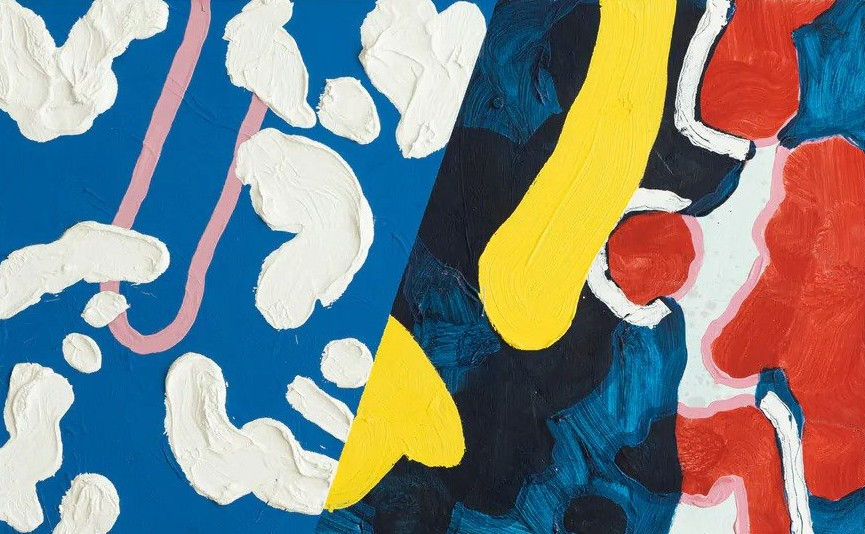
I was always an artist I suppose, I’ve been drawing and painting since I could hold a pencil. There are far fewer horse drawings now, though! Both of my parents are creative, so they always made sure I had plenty of drawing and crafting materials. I'm a product of my time; I was lucky enough to go to university to study Fine Art. I was the first in my family to do an undergrad, but I think that’s only because my parents' creativity wasn’t nurtured in the same way in their formative years. For example, when my dad finished school, he was asked if he wanted to work down the pit or on a building site. Luckily, my options were a bit more open! My early influences, when I first became serious about my practice, were abstract expressionism and graffiti, plus graffiti removal/buffing. Now my influences include meta-painting, post-digital art, and action painting.
What first drew you to exploring the relationship between digital aesthetics and traditional painting methods?Back when graffiti played a major role in my practice, I started using digital tools for early studies, employing a kind of ‘reverse entropy’. I reduced gestures, marks, and textures to their simplest forms. I’ve never been a digital artist, so the logical step for me was to render these sketches in oil paint. The more I worked with this process, the more I realised that the push and pull between the methods was more interesting than the original references. Eventually I shifted focus to that relationship itself, and away from the aesthetics of graffiti. It felt liberating to move away from source material and rely on my own visual language. There are so many areas to explore… our relationship with digital media, time and viewer experience, the artist’s hand, diagrams of painting, and how all of this fits within art history. I feel I’ve barely scratched the surface, so I’m still very hooked on this exploration.

How does automatic drawing shape the atmosphere and direction of your work?
Automatic drawing adds the unknown human element to an otherwise logical process, it can completely change the mood and weight of a painting. Some drawings have a frenetic energy that creates busier compositions, while others have a lighter minimal touch which creates a pause. I usually make sure there is a drawn element that feels like an interruption, I don’t want the drawings to feel like too much of an open book. I only recently realised that I have definitely had disassociative moments in the past, mostly during repetitive or lonely moments at part-time jobs, and the connection to this feeling presented itself in my automatic drawing. It was like this sudden déjà vu... like hold up where have I felt this sensation before... reminding me of when my arms felt ten feet long while folding knitwear for four hours, or walking circuits around an empty store with my head seemingly up in the ceiling. Very odd, but it feels good to reclaim this through the automatic drawing.
How do humour and self-deprecation function within the context of your visual language?
It sort of acts as an extra layer... whereas the text itself really does sit within my visual language as a compositional element. The energy of the text is similar to my automatic drawing, I'm not concerned with perfection and I like to let my hand/handwriting come through pretty naturally. So the text becomes its own motif, and it just so happens that my mind leans towards self-deprecation and humour for the content. The tone of the text and the aesthetics mirror each other, It's all pretty carefree and colourful, but with an undertone of seriousness. Those contrasts interest me, visually and conceptually.
How has your experience of being a working-class woman in the arts shaped your voice, your confidence, and the themes you explore?
I've really had to advocate for myself, I was never a naturally confident person. I guess when you start out at the back of the room, you have to shout louder to get anywhere at all. The whole experience has left me a bit jaded and bitter at times, but indignation brings its own energy and force! When I started using text to explore this theme, I was really pleased to feel kinship with other artists who share my experience. That made me want to keep pushing in this direction, using my voice and put more of myself into my work.

How has Leeds influenced your work?
Leeds has reinforced my themes, and although there are some specific nods to my hometown Barnsley throughout the work, the experience of living and working in Leeds isn't dissimilar. The art scene is just so much bigger here that it forces you to really place yourself in the wider art scene. I was pretty insular in my practice for a while, but since putting myself out there, both in my concepts and through networking, I’ve learnt that this integration means I am dissecting my own practice more.
It can be hard, especially when you're inclined to self-deprecation, but it's been so important to really get to the core of my work.
So the influence has been more of a critical journey, rather than an aesthetic one. I can't deny that when I first moved here over ten years ago, the imagery of the city and its graffiti really fuelled my abstract journey, but now that I’ve found my painting language, I've not needed that visual element from the city so much. It gave me what I needed, and now I’m trying to give myself back to it as part of the Leeds art scene.
And what do you love about being an artist in Leeds?
I love how many creatives there are here. Not just artists, but musicians, designers, performers. I can't keep up with all the events and shows. At the same time, I love how there are always familiar faces at events. Leeds is compact enough that you really get to know your contemporaries. I don’t think I’ll get tired of Leeds, or ever run out of things to do which is reassuring. I feel very at home here. I recently moved to North Leeds, so it's been great to be able to walk in the parks when I need a bit of space from the studio, to have access to both sides of the city.
Tell us about how and why you started The Art Crit:
After my undergrad, I found it difficult to get feedback on my work. I could talk to my friends, but they all had a prior understanding of me, my experience, and my work, so it inevitably became a bit of an echo chamber. I really valued those moments when I could get into a deep discussion with a fellow artist, but this was pretty sporadic because as mentioned before, I'd been pretty insular in my practice, so wasn't part of any collectives or groups. I was looking for crit events in Leeds... and I struggled. They were either one-off events I had missed, or for students within their respective universities. So I decided to make my own. I sat on the idea for a while, making sure I could properly devote time to it, and figuring out the logistics. I also put in a bit of casual teaching time at Leeds Arts University in their workshops and group crits for some experience. When it came to location, that was easy. I'm a pub gal, so if I wanted a friendly and relaxed environment, hosting at various pubs seemed like the perfect fit. I've been running them since April 2025 and it's been super rewarding.
What are your hopes and goals for The Art Crit?
As well as maintaining the regular Leeds events (held mid-week evenings, every 8 weeks) I have been keen to take it out to other Northern cities and towns. With my connection to Barnsley, that seems like the next logical choice. There's such a distinct and growing art scene in Barnsley that I think there would certainly be interest! Then maybe on to Sheffield too. I want The Art Crit to be accessible to all artists, so I'll also be introducing weekend/daytime sessions. I'm pleased to share that the first event for 2026 will be a bumper Saturday session in collaboration with Leeds Drawing Club, dates and details will be announced in the new year. I'm currently the solo host, but as The Art Crit grows, I’d love to bring in other artists as hosts and expand.
What kind of response do you get from the sessions? What do you and others get out of it?
Very glad to say that The Art Crit has had a very positive response at each event, and it’s been great to see so many practices including sculpture, film, painting, photography and spoken word. All the artists involved have been very forthcoming with discussion, feedback, and recommendations.
The opportunity to present your work, even just gathering bits together beforehand, has proved useful for everyone.
Before you've even opened up the floor to feedback, you've inadvertently assessed and organised your own work, and thought about what you want to dive into. I can see that generally, artists come away with an understanding of how a new set of eyes reads and understands their work, whether it aligns with the artist's intentions or goes off in a surprising direction. Personally, hearing other artists speak about their processes and experiences inspires me to no end, even if their practice is completely different to mine. It just feels good to relate to another creative’s psyche.
How important is it to you for artists to convene, discuss and socialize with each other?
It's so important to make your own community. And this will look different to everyone. For some artists, they may socialise and chat regularly within their studio, they may just check in sporadically and keep each other accountable, or events like The Art Crit may be their main source of creative discussion. I think regardless of personalities or practices, it’s good to feel part of the wider art scene, to challenge yourself. Critical analysis is a muscle that can be strengthened, and the best way is through socialisation. It allows you to build a network organically, which can become your collaborators and your support system. Sometimes you just need to understand someone else’s work and motivations, to understand your own in contrast.
For Jenny Beard, The Art Crit is a place for northern artists to break free of that echo chamber that so many artists find themselves in. You can find out more about The Art Crit here.